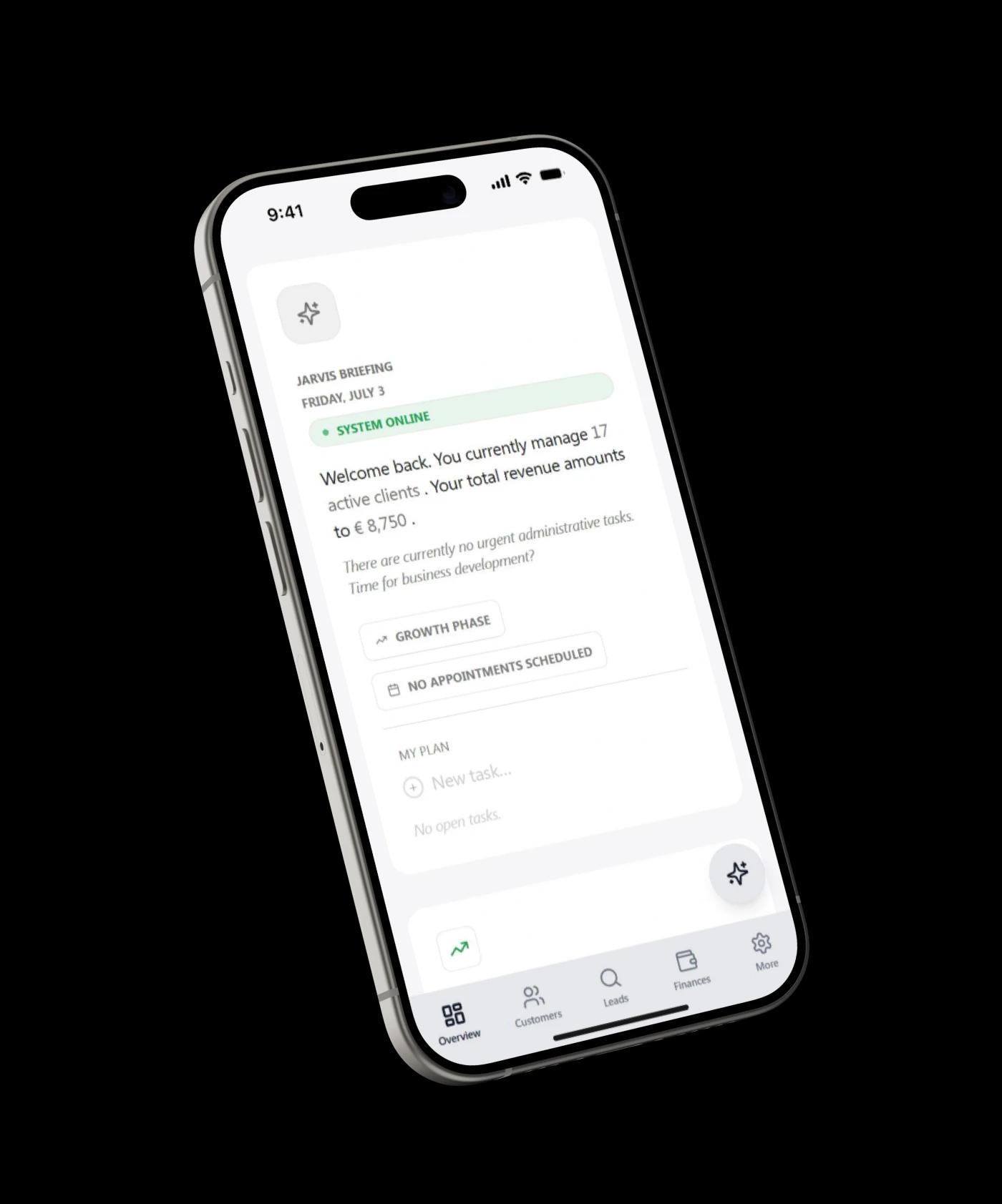
JARVIS is the internal operating system I built for 2Site and run my studio on every day. Email inboxes, social media messages, clients, finances, invoices and files all sit in one place, from the first lead to the finished invoice.
JARVIS started small: a to-do list and a place to keep my files. That was all it was meant to be. The Claude API was wired in from the very first version, and over time I built my own commands on top of it, shaped around the small jobs that come up in my day.
That to-do list grew into the system I now run the studio on. Today it holds my email inboxes and social media messages, alongside client management, finances, and invoice and document generation. Because it is my own project, with no client and no confidentiality to protect, I can show openly how it is built and what it does.
 Claude API
One system to run the whole studio.
From many tools to one system.
The change is less about hours on a stopwatch and more about how the studio runs. Starting out as a to-do list and a file store, JARVIS is now the system where messages, clients, invoices and finances come together, from the first lead to the finished invoice, and it is in daily use.
I have not invented hour figures here, because the honest gain is structural. The studio no longer runs across a pile of disconnected tools; it runs on one system I shaped around my own work. That is why JARVIS is not a side experiment but the thing I open first every day.
A to-do list grew into the system my studio runs on.
JARVIS began as a personal project: a to-do list and a place for my files, nothing more. The Claude API was wired in from the start, and I built my own commands on top of it piece by piece. Over time that grew into my studio operating system, where email inboxes, social media messages, client management, finances, and invoice and document generation now come together. It runs on a modern web stack, with a PostgreSQL database keeping the data together, the Claude API behind the assistant, and the Google Places API behind the lead finder. Because it is my own tool, shaped around the way I actually work, it fits instead of forcing me to fit it. It is live, and I use it every day. Building it for myself is also how I learned, first-hand, what it takes to build a calm, connected system for someone else.