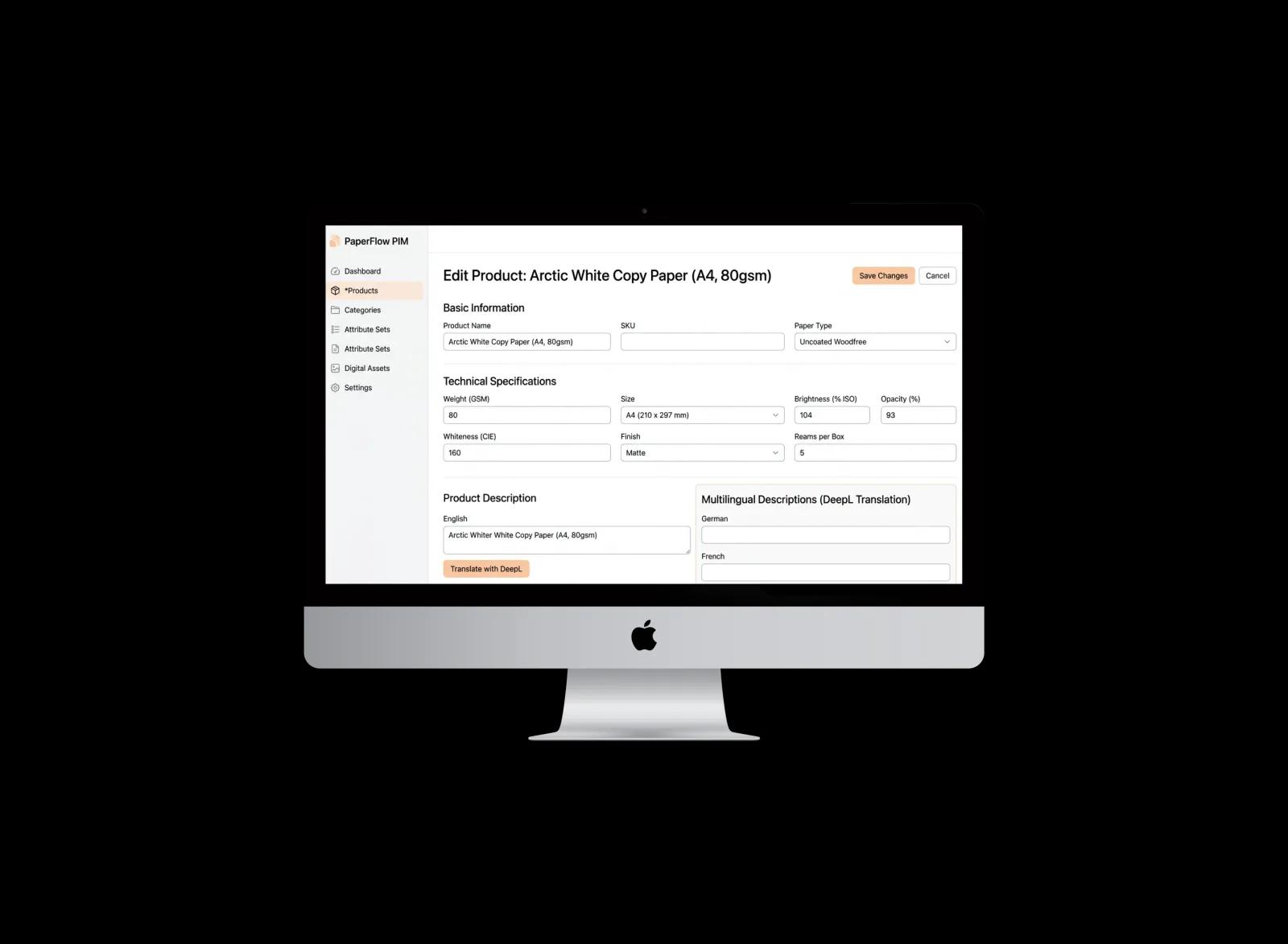


A PIM (Product Information Management) is the single place where all product data lives: names, attributes, texts and translations. Before, all of that sat scattered and was pushed back and forth through Excel. Every change meant export, edit, re-import. It was slow, and mistakes crept in along the way.
I replaced the old system, the PIO BI-Suite. PIO was the product and business software; the BI-Suite was the bolt-on for information, analysis and reporting on top of it. In its place is a single online tool that is much faster and shows the data live.
One tool where all product data lives.
A tool that works live
Three decisions make the difference between the old flow and the new one.
Live in the browser, not export/import
The tool runs in the browser and updates the view the moment a value changes. That replaces the old model of export, edit and re-import, which was slow and invited mistakes.
DeepL integrated through the API
Translation is wired in directly through the DeepL interface. A text is translated into several languages inside the tool itself, with no copying into a separate service.
A clean, rebuilt data structure
Roughly 23 attribute sets for the paper types, each with its own fields, across hundreds of fields. A clear foundation that keeps the data reliable to maintain.
What changes day to day
Two tasks that used to be fiddly now go straight through.
The savings are described qualitatively. I do not quote numbers I have not measured.
Product data in one place, live and fast
Scattered Excel files and a heavy legacy system have become one calm, clear flow. Product data lives in a single place, changes are visible at once, and translations happen right inside the tool. The system is live and in use.